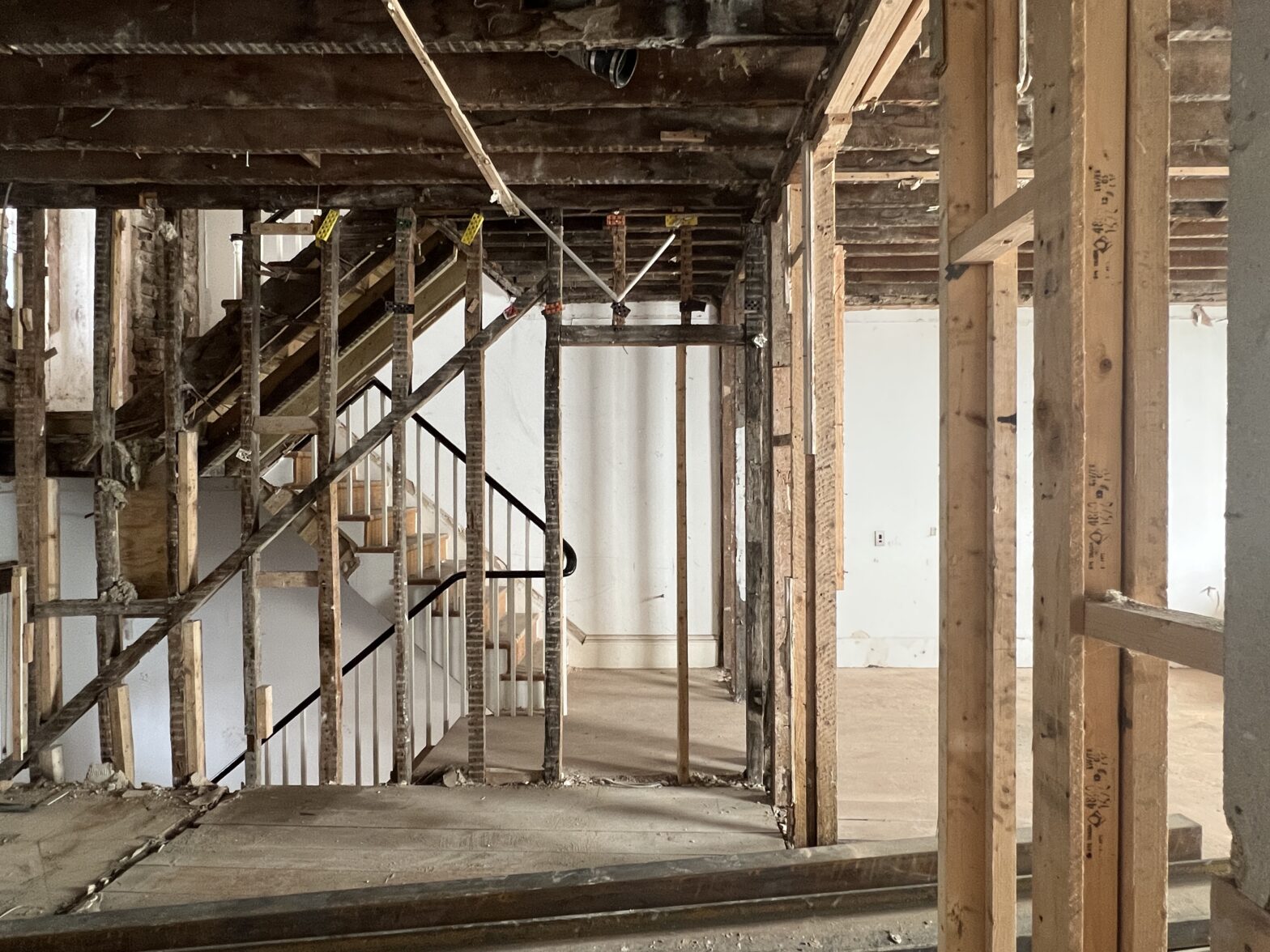
Our Ovington Square site sits at the intersection of heritage, engineering and modern residential living. In the heart of Knightsbridge, we’re transforming two five-storey townhouses into six high-end apartments — all while retaining the original street-facing façades within a conservation area.
We joined the project in 2019 after the client parted ways with their previous architect, and from that point we’ve taken the scheme through pre-application, planning, technical design, tender and now into construction.
Although the façades hold their historic presence on the square, the buildings behind were in poor condition and had been heavily altered over time. One suffered long-term water ingress and structural deterioration. The most responsible design move was clear: retain the façades and rebuild everything behind them to modern standards of safety, performance and quality.
Façade Retention: Where Architecture Meets Engineering
Façade retention is as much about logistics and engineering as it is about architecture. With the façade standing, every element of construction must pass through existing window and door openings — placing strict limits on plant, materials and sequencing. Temporary works, stability and site logistics become central to the strategy.
Meanwhile, the historic façades require their own careful restoration: repairing brickwork, reinstating mouldings and renewing window surrounds so the character of the building is preserved and strengthened.
Inside, the task becomes one of absolute precision. Modern buildings need thicker floor and wall build-ups, robust fire and acoustic separation, lifts, risers, ventilation and air-conditioning — none of which existed in the original nineteenth-century structure. Aligning these contemporary requirements with historic window positions meant coordinating levels down to the millimetre from basement to roof.
From Two Townhouses to Six Homes
The new layout reimagines the two original houses as a single, unified residential building. A central lift core and circulation route allow all apartments to become dual-aspect and lateral — a major uplift in quality and value.
Even with the subdivision into six units, the homes remain generous. Achieving this meant exceptionally tight coordination between structure, architecture and M&E to protect ceiling heights, contain service zones and minimise any loss of saleable area.
We also adopted a future-focused approach to safety and performance. Even where not required by regulation, non-combustible construction is used throughout — giving confidence to both the client and future residents.
Collaboration at Every Level
Interior design is led by Lydia Allen, with Resident coordinating technical integration, detailing, performance and full services alignment. Structural, M&E and façade engineers have worked closely with us to resolve the complexities of building behind a standing façade.
Following extended Party Wall negotiations, construction began with soft-strip in June. The build programme is now forecast at around two years.
A Project About Balance
Ovington Square is ultimately about finding balance:
• between heritage and performance
• between commercial viability and architectural quality
• between historic character and modern standards of living
By retaining what matters most visually and rebuilding what matters most technically, the scheme offers a clear model for how conservation-led developments can still deliver high-quality, future-ready homes.